
- Product Name
- Product Keyword
- Product Model
- Product Summary
- Product Description
- Multi Field Search
Views: 13 Author: Site Editor Publish Time: 2026-07-30 Origin: Site
Motorized retractable awnings have become standard equipment for modern recreational vehicles, caravans and overland campers, delivering effortless outdoor shade without manual cranking and physical labor. According to global outdoor leisure equipment market data, motor‑driven RV awnings maintain steady annual growth, with more RV owners replacing outdated manual systems and factory OEMs integrating compact DC drive solutions into new vehicle builds. Among all drive options, DC planetary gear motors stand out as the most matched power source for mobile awning systems, balancing compact dimensions, vibration resistance and steady high torque unique to RV operating conditions.
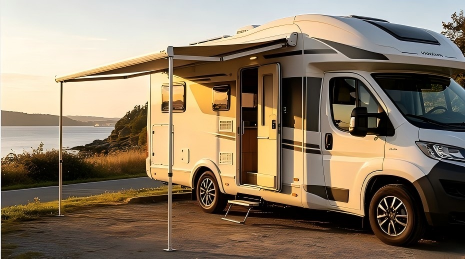
Many RV operators and awning installers face common selection pitfalls: underpowered drives stall under damp canvas loads, poorly structured gearboxes wear quickly from road bump vibration, and oversized motors fail to fit narrow roller tube cavities. This guide breaks down the core logic of planetary gear motors for RV retractable awnings, covering working principles, core selection criteria, environmental adaptability, control compatibility, installation rules and frequently asked questions, built around I.CH Motion’s dedicated vehicle awning planetary gear motor series designed for caravan mobile use.

Unlike residential fixed tubular motors powered by mains AC electricity, RV awning planetary gear motors are fully DC battery‑driven, engineered to fit the confined installation space of
vehicle roller tubes and withstand continuous road vibration. The complete drive unit integrates three core functional modules within a single cylindrical housing: DC motor core, multi‑stage planetary gear reducer and built‑in limit switch trigger.
The operating workflow follows a simple, reliable logic. When receiving signals from a wired rocker switch or wireless RF remote, the DC core generates high‑speed low‑torque rotation. The planetary gearbox redistributes load across multiple planet gears circling a central sun gear, cutting high input RPM down to slow, stable output rotation while amplifying torque output. This coaxial planetary layout is the critical advantage over spur gear alternatives: load sharing eliminates concentrated tooth friction, extending service life under uneven awning fabric weight and shock vibration from off‑road driving.
The output shaft connects directly to the awning roller tube, rotating bidirectionally to unwind fabric for extension or roll fabric back into storage. Integrated limit mechanisms automatically cut power once the awning reaches fully open or fully retracted positions, preventing over‑rotation that tears canvas or bends awning support arms. The entire unit adopts a fully sealed cylindrical structure, avoiding bulky external transmission components that would conflict with RV frame mounting brackets.
Three decisive metrics determine motor compatibility, prioritized in order of functional importance for RV mobile applications.
Insufficient torque is the top cause of premature motor failure on RV awnings. Unlike stationary residential awnings, RV canvas accumulates extra weight from rainwater, dust and road grime; off‑road bumps also create transient shock loads during extension and retraction. The general industry rule for vehicle awnings calculates required torque based on total awning assembly weight, with a minimum 1.5x safety margin reserved for wet fabric conditions.
Compact 32mm planetary gear motors from I.CH Motion support adjustable torque output via customizable gear reduction ratios, covering small side‑mounted RV awnings and medium‑width overland 180° shade systems. Users must avoid selecting motors at the absolute lower torque threshold: seasonal moisture weight gain will push marginal units into continuous overload, triggering thermal shutdown and permanent winding damage over months of use.
RV roller tubes and vehicle side frame brackets leave minimal internal clearance for motor installation, making the coaxial planetary layout irreplaceable compared to offset worm gear drives. The 32mm diameter series featured for RV awnings adopts standardized flange and output shaft profiles to fit mainstream aluminum roller tube inner cavities of caravans, camper vans and 4x4 overland vehicles.
For aftermarket replacement projects, installers only need to confirm two dimensional benchmarks: roller tube inner diameter and output shaft geometric profile (hexagonal or round drive). Custom shaft lengths and flange mounting holes are available for special modified RV awning frames, eliminating complex mechanical adapters during retrofitting.
All RV planetary awning gear motors support dual DC voltage options of 12V and 24V, aligned with standard vehicle house battery architectures. 12V models suit most light‑duty campers and small travel trailers with single lead‑acid battery banks, while 24V variants serve heavy‑duty wide awnings on large motorhomes and overland expedition vehicles with dual battery setups. No external voltage converter is required for direct battery connection, simplifying wiring layouts and reducing extra electrical failure points.
RV awnings operate in far harsher variable environments than fixed building shades, spanning extreme temperature swings, continuous mechanical vibration and outdoor moisture exposure. Purpose‑built planetary gear motors for vehicle awnings address these harsh conditions with targeted structural upgrades.
The drive unit operates stably across -15°C to 70°C, covering cold mountain camping winters and high‑temperature desert summer road trips. Internally filled with low‑temperature synthetic lubricant, the planetary gearset maintains smooth rotation without grease solidification in subzero climates, while heat dissipation grooves on the motor housing prevent overheating under midday direct sunlight.
Continuous bump vibration on gravel, corrugated and off‑road tracks loosens fasteners and wears gear teeth on generic gear motors. The RV‑specific planetary series reinforces gear housing lock rings and uses hardened alloy steel gear teeth, distributing vibration impact evenly across multiple planet gears to avoid localized tooth abrasion. All internal wiring is secured with anti‑loose cable fixtures to prevent circuit disconnection during long‑distance cross‑country travel.
The fully sealed aluminum alloy motor shell delivers reliable dustproof and splash‑proof performance, resisting rain splashes, roadside mud dust and coastal salt mist during seaside camping trips. Cable outlet terminals are fitted with rubber waterproof gaskets to block moisture intrusion that would short internal windings, eliminating the need for additional external waterproof enclosures on exposed vehicle side mounting positions.
Three mainstream control architectures match RV users’ different usage demands, all fully compatible with the planetary gear motor series:
Wired Rocker Switch Control
The most cost-effective basic solution, wired directly to the motor’s positive and negative power terminals. A three-position wall-mounted switch installed inside the RV cabin enables instant open/stop/retract operations, with zero signal delay and no wireless signal interference risk. Ideal for budget retrofits and vehicle owners who prefer fixed interior control points.
RF Wireless Remote Control
The most popular configuration for modern motorized RV awnings, supporting separate handheld remotes or wall-mounted RF transmitters. Only two core power wires connect the motor to the battery; no separate control wiring runs between the vehicle cabin and exterior awning mount. Control range reaches 20–30 meters line of sight, allowing users to adjust shade position while standing outside the camper without entering the vehicle. Multiple awnings on a single RV can be grouped under one remote channel for synchronized operation.
Sensor-Aided Smart Automation (Customizable Upgrade)
For premium overland setups, the motor can integrate external wind and sunlight sensor modules. When wind speeds exceed the awning’s safe operating threshold, the drive automatically retracts canvas to avoid frame bending or fabric tearing. Sunlight sensors trigger automatic awning extension on bright days, realizing hands-free intelligent shade management for long-term stationary camping.
Installation follows a streamlined universal workflow optimized for mobile vehicle roller tube structures, with limit switch programming as the most error‑prone critical step:
Verify dimensional matching between motor flange, output shaft and roller tube internal profile; remove the original manual crank assembly for retrofits.
Slide the planetary motor fully into the hollow roller tube, locking the motor head crown to the vehicle awning bracket with anti‑rotation pins to prevent the entire motor body from spinning alongside the tube during operation.
Complete DC wiring with waterproof cable glands at the motor terminal end, routing power cables along RV frame cable channels to avoid abrasion from road vibration.
Program open and closed limit positions: power the motor to fully extended canvas, set the open limit trigger, then retract completely to calibrate the closed stop point. Electronic limit variants support remote one‑click calibration without mechanical disassembly.
Run 5‑10 full open‑retract cycles for functional testing, confirming smooth fabric rolling without jitter and accurate automatic shutdown at both travel endpoints.
Pair wireless remotes if applicable, grouping multiple awning drives to shared remote channels as required.
Q1: Can the planetary gear motor replace original factory RV awning motors?
Yes, full aftermarket compatibility is supported. Users only need to confirm three parameters before ordering: operating voltage, required torque matching awning width/weight, and roller tube internal drive profile. Custom shaft and flange modifications are available to match original OEM mounting structures without frame modification.
Q2: What service life can RV awning planetary gear motors deliver?
With correct torque sizing and standard seasonal use of 3‑5 open/close cycles daily, quality planetary gear units achieve 50,000+ full operating cycles. This service lifespan exceeds the typical replacement cycle of RV awning canvas (8‑15 years). Overloading, however, will drastically shorten service life, so torque safety margins must never be ignored.
Q3: Is manual retraction possible during RV battery power outages?
The planetary gearbox design supports manual back‑drive functionality. Users can attach a standard hand crank to the motor’s exposed shaft end to manually roll the awning closed during full battery discharge, a vital safety feature for sudden wind gusts or remote camping without power access.
Q4: Does the motor require regular maintenance?
The planetary gearbox is factory‑sealed with permanent synthetic lubricant, eliminating routine oil refilling or gear disassembly maintenance. Annual system checks only require verifying waterproof cable gasket integrity, securing anti‑rotation bracket pins and recalibrating limit positions if minor position drift occurs from long‑term vibration.
As motorized RV awnings continue to dominate global outdoor leisure vehicle markets, DC planetary gear motors remain the optimal drive solution balancing compactness, high torque density and mobile environmental durability. For RV OEM manufacturers and aftermarket retrofit installers, selection must prioritize torque matching first, followed by dimensional compatibility and onboard DC voltage alignment.
The 32mm series planetary gear motor developed by I.CH Motion caters specifically to retractable RV awning demands, integrating vibration‑resistant planetary transmission, wide temperature operation and flexible control compatibility to address all pain points of mobile vehicle shade systems. Proper specification matching and standardized installation will deliver decades of smooth, low‑fault awning operation for cross‑country camping and overland travel. For customized torque, shaft dimension or control function adjustments, direct factory technical consultation can deliver tailored drive solutions for all sizes of caravan and camper awning projects.